10,000 things you never knew you needed, until now.
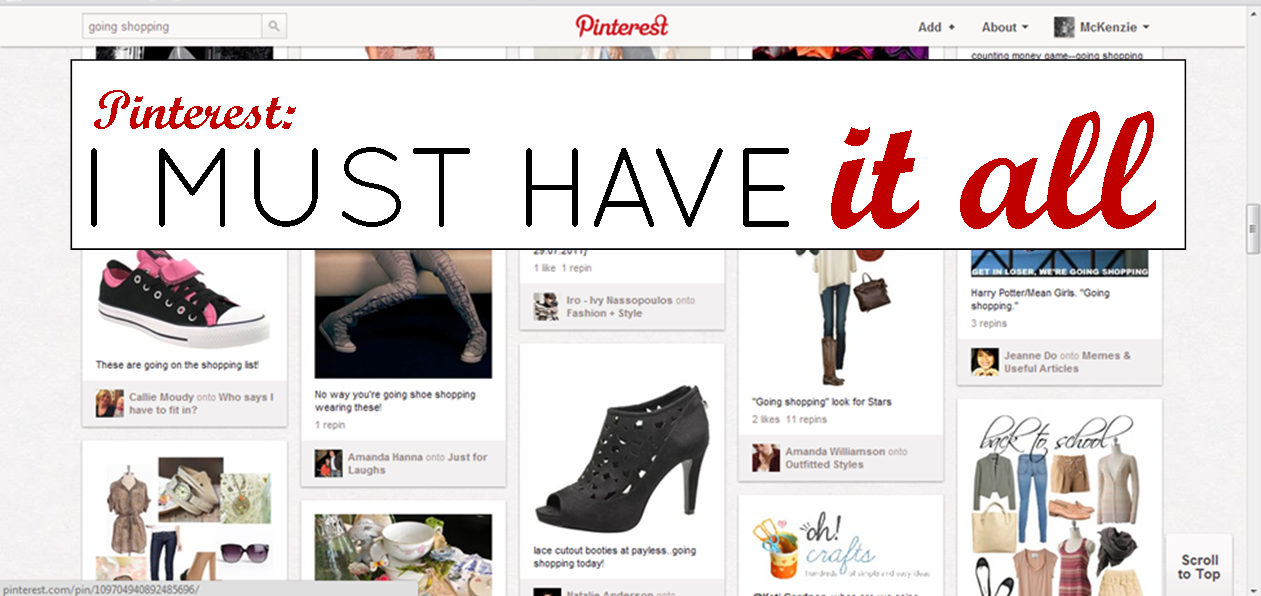
Ever since a colleague urged me to visit Pinterest.com last year, I’ve had a growing curiosity about the site. Basically, what’s the deal with Pinterest, and what makes it so wildly popular? Do boys ever use it? What’s with the invitation-style registration process? Is this site just another way to boost consumption in America? Does it discourage people from actually creating anything on their own? Read on for the scoop.
Social Media’s got a New Prom Queen
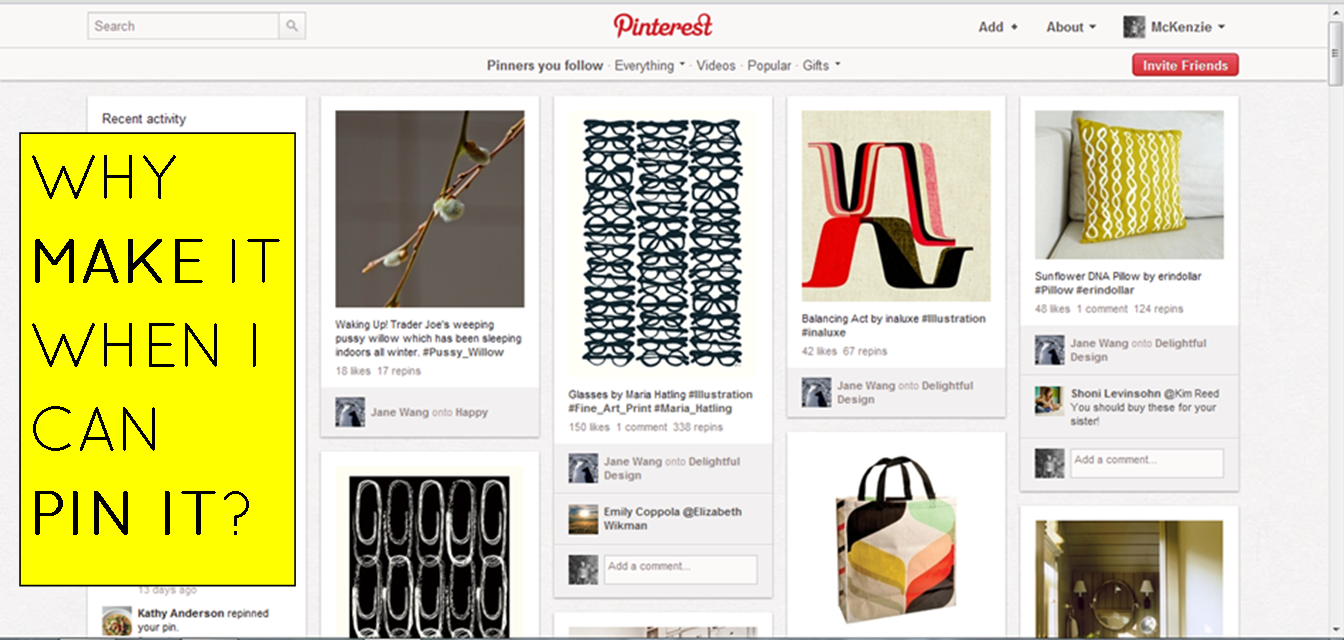
For those of you who have yet to pay your respect, here’s a paraphrased version: If social media were a male brothel, Pinterest would be everbody’s new favorite, fresh-faced playboy. The site is used, in short, for photo sharing, allowing users to create theme-based image collections. And all with an appearance yet untarnished by the typical advertising and calculated marketing blemishes that permeate other social media sites.
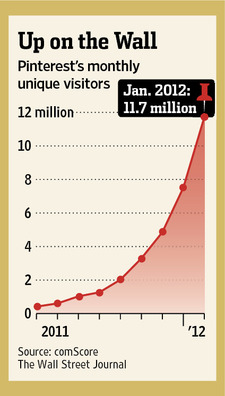
In 2011, Pinterest established itself as one of the top 10 social networks IN THE WORLD (wow, I know), with 11 million total visits per week.
Some have rightly wondered, Aren’t there already sites, such as Delicious.com, that do the same thing? Yes, there are other bookmarking sites whose offerings are similar. But, unlike Pinterest, these predecessors have passed on to the digital afterlife. So why Pinterest?
Some point to the site’s visual appeal as a major selling point. Unlike other sites, such as Facebook, which encourage the exchange of original written content as well as other types of media, Pinterest exclusively promotes what experts are referring to as “social content curation.”
In laymen’s terms, people are finding the original content of other people and sites, and posting it on their own walls and boards to foster their own personal online brand.
How Pinterest Makes Most of Us Lazy and Uncreative
In an article titled “you are what you curate: why pinterest is hawt” from gigaom.com, serial technology entrepreneur Elad Gill writes,
“2012 will likely see an acceleration of structured, push button, social curation across the web. Why? Because most users don’t want to take much effort to produce content, and consuming content in a structured manner (especially photos) is much faster. Just as the first wave of social media has transformed the consumption of information, this next wave of social curation will fundamentally change how users find and interact with content over time.”
I would like to suggest that the key takeaways from Gill’s quote are as follows: Pinterest is popular because most of us are lazy internet users who don’t want to take the time to create original content. We also want to waste as little time as possible scanning sites for other people’s ideas that we can then amass in a way that makes our online selves appear original and full of ideas.
In the same article, the writer Om Malik points to Pinterest’s popularity as a type of new-age collage. Just as you would clip images out of magazines as a child and glue them to a cover or page with Elmer’s glue, you now look for images and links online that make you, as Malik describes, “feel very cool, because being able to create an awesome, colorful collage” allows you to “show something about yourself.”
Have You Checked out Her Boards?—She’s SO Pinteresting!

This desire to express ourselves and demonstrate our original identity online is part of a larger social trend referred to as “hyperpersonalization”. Malik explains that “we are all living in a society that is so homogenized that it is hard to stand out.”
Due to the mass-produced world of stuff around us, we have begun searching for a way to gain distinction from the masses. This theory naturally extend to the online world. To appear original, we carefully curate an online image of ourselves using social networks like pinterest.
But does posting a link with someone else’s art or image to Pinterest actually make me unique? I would like to suggest that the “uniqueness” promoted by Pinterest is actually a superficial sense of uniques—a false sense of self that discourages individuals from actually creating anything themselves. Why bother, when it’s so easy to appear unique by simply pushing a button I’ve installed on my bookmarks bar that will add another awesome idea or photo to my pinterest board?
Pinterest is Secretly about Purchases
Despite the lack of direct advertisements, according to mashable.com, Pinterest drives more referral traffic to retailers than Linkedin, Youtube, and Google+ combined. And, according to the Atlantic, up until recently, the site was using a little-known service called “SkimLinks” to make an earning off of these referrals. As the Atlantic explains, “SkimLinks’ software looks at links users post to websites, determines if there is an affiliate program to which they can be linked, and appends a code that ensures Pinterest gets credit for (and data from) the referral.”
This means that retailers and other business (DUH) have been making mucho dinero off of our online fake personality curation. I would even go so far as to suggest that visiting Pinterest often gives me a guilty sense of pleasure similar to reading a fashion magazine or visiting marthastewart.com. Which brings me, appropriately, to my next section:
Where the Men at on Pinterest?

One fascinating aspect of Pinterest is its mainly female user population. According to the Wall Street Journal, roughly 68% of users are women, and many are in the Midwest. This female-heavy popularity is reflected in the site’s interaction with facebook, with 97% of the Pinterest’s facebook “likes” being made by women.
Considering the fact that the site has reached the 10 million unique users mark faster than any other social network before it, it’s rather astounding to consider that the great majority of these users are women. These findings, no doubt, have begun to shape the way that marketing departments think about female consumers and the role they play in the online market.
But why don’t men like it? The site heuge.com published an article, titled “Pinterest Hates Men”, that went so far as to suggest that the site has been created with a specific target user (women) and that it doesn’t aim to hook men. The article’s author, Eugene Hsu, defends the claim with the observation that the site self-identifies itself as a site aimed solely at women. It’s “About” section reading:
“Pinterest lets you organize and share all the beautiful things you find on the web. People use pinboards to plan their weddings, decorate their homes, and organize their favorite recipes.”
The site, it appears, mainly promotes the type of images and subjects the likes of which you would typically see in a girly magazine. This is not, however, to say that the site could not be used for more.


 mckenzie malanaphy
Do tell.